


Going Solar
 Jan 23rd 2025 | 8:58 pm
#16

BE Forum Addict

Joined: Jun 2012
Posts: 3,326


 Re: Going Solar
I applaud your efforts and appreciate you sharing your experience.
It's very valuable to those of us who still need to make decisions about it all.
Jan 24th 2025 | 3:51 am
#17
Living the Dream
Joined: Apr 2018
Posts: 83
From: Western Algarve
Re: Going Solar
One point I would make is users tend to view the effectiveness of batteries on their night time delivery. Based solely on that, then depending on the cost of the battery per KW it can appear to be a questionable expense.
As with most things, as I’ve already alluded to its more about the joined-up thinking of the complete system starting with the individual panel wattage generation. Secondly, its making sure the direction of them is optimised for maximum light capture throughout the whole day. A typical scenario would be, the battery depletes overnight but the following morning the sun is out and due to the positioning of some of the panels they immediately start generating power to the household and any excess starts immediately charging the batteries. As the day progresses there is some cloud cover but because of the early morning charge the batteries supplement the reduced panel output and later in the day when the clouds clear the panels return to charging the batteries while continuing to power the household including say a three-phase pool pump.
Given the correct number of panels and the correct installation of optimisers running in balanced strings there is normally enough daylight to fully charge the batteries and run the household on depleted sun (panels are not as dependent on full sunlight as they used to be).
In other words, providing a lot of thought is put in to the installation the measure of the battery delivery has to be taken over a twenty-four-hour period not just overnight.
The obvious question is, why aren’t all systems like this, the answer is quite simple, the cost and not enough space, users normally want the panels tucked up out of the way on the roof normally on a single elevation and secondly, it’s a lot more labour cost to spread the panels out, coupled with more panels and longer cable runs and extra expense in optimisers. Each panel needs it own optimiser at say 275 euro’s per panel plus an inverter that can handle more than the typical two strings. The inverters and extra strings are well worth it with or without batteries.
It does pay for itself especially given the number of days down here that are bright (as apposed to full sun) and the batteries probably make a contribution in the region of 260 to 280 days per year.
As I have said, it’s not for everyone and is an individual judgement call.
Mar 5th 2025 | 6:20 am
#18
Living the Dream
Joined: Apr 2018
Posts: 83
From: Western Algarve
Re: Going Solar
We're completing some work on the house so the consumption is a bit erratic. We're not using power all day but in a way it helps to show the example clearly. I'm showing some screenshots below to show how the PV and battery work together to make sure there is still no draw from the grid.

The graph above shows the house consumption with a peak between 12.30 and 14.30.. The battery (in purple) shows the partial supply to power the house because there was no substantial PV output.

This graph shows when the sun was out and it powered the house and allowed the battery to switch off.

This graph shows the PV charging up the battery. The morning peak was when the sun was out and it fully recharged the battery from overnight use. The later peak shows the PV fully recharging the batteries from the daytime use back to 100% ready for the overnight use again.
I've posted this to show when working out the cost efficiency of batteries you just can't calculate it on overnight usage.
The graph above shows the house consumption with a peak between 12.30 and 14.30.. The battery (in purple) shows the partial supply to power the house because there was no substantial PV output.
This graph shows when the sun was out and it powered the house and allowed the battery to switch off.
This graph shows the PV charging up the battery. The morning peak was when the sun was out and it fully recharged the battery from overnight use. The later peak shows the PV fully recharging the batteries from the daytime use back to 100% ready for the overnight use again.
I've posted this to show when working out the cost efficiency of batteries you just can't calculate it on overnight usage.
Mar 5th 2025 | 9:29 pm
#19
BE Forum Addict
Joined: Jun 2012
Posts: 3,326
Re: Going Solar
That's really cool.
It would be interesting to see the different graphs and total panel and battery output after a year or so; maybe it would be possible to separate and work out how much the panels and battery earned for you.
Of course everyone will have different usage patterns.
It would be interesting to see the different graphs and total panel and battery output after a year or so; maybe it would be possible to separate and work out how much the panels and battery earned for you.
Of course everyone will have different usage patterns.
Mar 12th 2025 | 11:59 pm
#20
Just Joined
Joined: Mar 2025
Posts: 1
 Re: Going Solar
EDP, our energy provider have been trying to persuade us to install a solar system in our home.
The system that they recommend consists of 8 solar panels amounting to 16 sq mts, on the roof , and with a total output of 3.24 Kw.
Also included is a 5Kwh Battery. Although they admit that the system is not capable to provide all the electricity we require, it is expected to reduce our Grid requirement substantially, with a saving of around 600€ pa. Our current annual bill is around 1200 total pa. The buying back by EDP, of any surplus energy generated by the system would be compensated for, with a 10% discount on any additional Grid energy that we require but for the first 2 yrs only.
Potencia charges and the other addons do not change.
The cost of the system is 10,000€ payable up front or in 60/96 month instalments costing a bit more.
The contract includes 12 yr warranty on the panels and 10 yrs on the battery. Annual cleaning of the panels is included.
Solar systems have reduced in price quite dramatically over the past few years and I noticed that Leroy Merlin have 2 sq mtr panels costing 109€ each so 8 x 109 = 872 plus a battery and installation say another 4k comes to 5k tops ?
So comparatively, the EDP deal looks very expensive.
I,m wondering if anyone has gone for a EDP system, and if so how is it working out ?
Any/ all observations gratefully received !
The system that they recommend consists of 8 solar panels amounting to 16 sq mts, on the roof , and with a total output of 3.24 Kw.
Also included is a 5Kwh Battery. Although they admit that the system is not capable to provide all the electricity we require, it is expected to reduce our Grid requirement substantially, with a saving of around 600€ pa. Our current annual bill is around 1200 total pa. The buying back by EDP, of any surplus energy generated by the system would be compensated for, with a 10% discount on any additional Grid energy that we require but for the first 2 yrs only.
Potencia charges and the other addons do not change.
The cost of the system is 10,000€ payable up front or in 60/96 month instalments costing a bit more.
The contract includes 12 yr warranty on the panels and 10 yrs on the battery. Annual cleaning of the panels is included.
Solar systems have reduced in price quite dramatically over the past few years and I noticed that Leroy Merlin have 2 sq mtr panels costing 109€ each so 8 x 109 = 872 plus a battery and installation say another 4k comes to 5k tops ?
So comparatively, the EDP deal looks very expensive.
I,m wondering if anyone has gone for a EDP system, and if so how is it working out ?
Any/ all observations gratefully received !
May 20th 2025 | 12:57 am
#21
BE Forum Addict
Joined: Jun 2012
Posts: 3,326
Re: Going Solar
IVA on components is set to rise from 6% to 23% at the end of June, unless the government jumps in with an extension to the low rates.
So for ditherers like me, it's time to get to it!
I was just checking on various bits; 600w panel from "obras360" (who I have bought material from in the past) is 80 Euros (!!!) This is so cheap that it's difficult to imagine that prices on this part of the system will drop much further, if at all. The panels used to be the expensive part, now they're the cheapest part of the system.
Inverters are coming down but slowly; battery costs continue to drop so it's hard to say whether it's time to buy them now or not.
Regarding the question I asked earlier in this thread about the economic viability of batteries at today's prices; it's still hard to pin down, but they now come with a 10 year warranty and supposedly will live through 6,000 cycles. That would be around 4 cents per kwh.
So, correctly sized, I think the answer is a yes.
Installers are all booked out (of course), however, you can make the invoice and pay the bill before the work is done, if you dare.
So for ditherers like me, it's time to get to it!
I was just checking on various bits; 600w panel from "obras360" (who I have bought material from in the past) is 80 Euros (!!!) This is so cheap that it's difficult to imagine that prices on this part of the system will drop much further, if at all. The panels used to be the expensive part, now they're the cheapest part of the system.
Inverters are coming down but slowly; battery costs continue to drop so it's hard to say whether it's time to buy them now or not.
Regarding the question I asked earlier in this thread about the economic viability of batteries at today's prices; it's still hard to pin down, but they now come with a 10 year warranty and supposedly will live through 6,000 cycles. That would be around 4 cents per kwh.
So, correctly sized, I think the answer is a yes.
Installers are all booked out (of course), however, you can make the invoice and pay the bill before the work is done, if you dare.


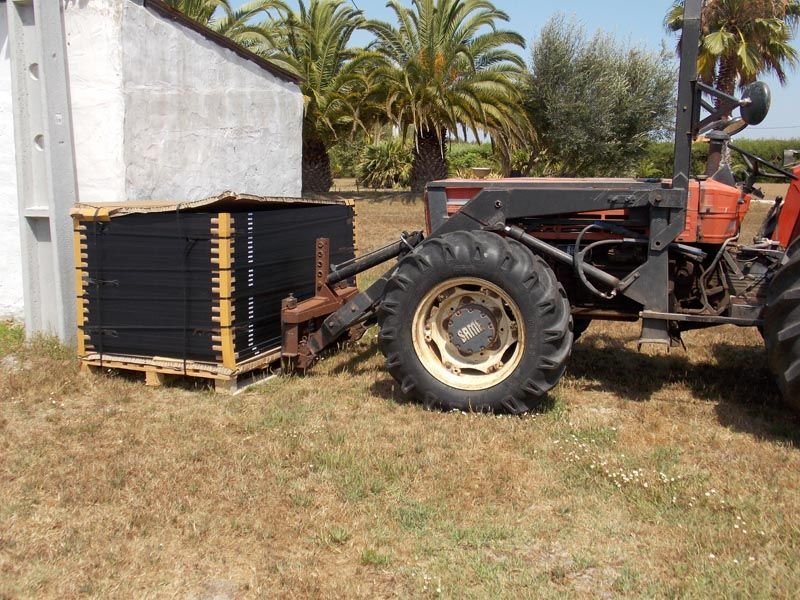 Jul 8th 2025 | 7:33 pm
#24

BE Forum Addict
Joined: Jul 2014
Posts: 1,305
Re: Going Solar
Is that an "ATLANTIC" heat pump system?..they are excellent! Sometimes they can be a little noisy at the intake/exhaust ports so route them to a place where that won't be an annoyance. (That's if you are running it as a standalone system).
Jul 9th 2025 | 5:54 am
#25
BE Forum Addict
Joined: Jun 2012
Posts: 3,326
Re: Going Solar
It's Samsung AE120RXYDGG... 3-phase 12kw output. I wanted a major brand that I could self-instal and they had a good price.
It came with a lot of bits and pieces, electronic sensors and controls. There's also a 100 liter buffer tank and a 300 liter domestic hot water tank.
So when the sun hits the massive solar array, everything can heat up. It's sized to work in winter, which means there will be a large excess in summer.
The bureaucracy is high, and the returns low for grid injection, so I'm not going to bother with that.
One guy I know makes hydrogen with his excess solar power. It's an idea; but I'm always waiting to hear an explosion from his place.
It came with a lot of bits and pieces, electronic sensors and controls. There's also a 100 liter buffer tank and a 300 liter domestic hot water tank.
So when the sun hits the massive solar array, everything can heat up. It's sized to work in winter, which means there will be a large excess in summer.
The bureaucracy is high, and the returns low for grid injection, so I'm not going to bother with that.
One guy I know makes hydrogen with his excess solar power. It's an idea; but I'm always waiting to hear an explosion from his place.

