


Central heating options & water heating
 Mar 12th 2016 | 2:38 pm
#1

Thread Starter
Forum Regular

Joined: Jan 2010
Posts: 248
From: UK at present


 Central heating options & water heating
Most of the houses I've been looking at online seem to have either forced air central heating or 'baseboard heating'. Is this basically electric underfloor heating? If so, cripes, it must be hideously expensive to run.
Does this forced air central heating typically extend into the basement if the basement has been finished? If not, is it easy/relatively cheap to upgrade an existing central heating system to include the basement when finishing it off?
What about water-based heating systems? Does radiator central heating, like in the UK, exist in Canada? What about much cheaper to run hydronic underfloor heating, as found in most scandinavian counties?
Quite a lot of houses also seem to have electic/gas fireplaces in one of the main living areas. Is this mains gas or bottled gas normally? I much, much prefer logburners as a secondary method of home heating, since even those which are restricted to high burn temp without a rural slide for overnight, will still pump out loads of heat for hours and will work in a power cut. Are logburners common, as I've not seem a single house in the GTA with one? Are there regulations preventing their use or restricting use to only certain models/particulate emissions standards?
I'm trying to understand central heating/hot water boilers/furnaces. In Canada does central heating and hot water heating run off the same system or seperate ones. Are hot water tanks common is are those combi-style instant hot water heaters more common. Not a fan of those, as it means cold shower in a power cut. In relatively modern houses, do they run from gas, oil or are they electric.
Lastly, are solar hot water and PV panels in common use/affordable/easily available. I've got no experience with their use in much colder climates, but I do have friends with solar panels in the North of England and Scotland and even with all the grey skies and rain, they have still found them to be financially viable. Given Toronto is much sunnier over winter, I did wonder whether it would be an option or is there some reason why the extreme cold would mean it's not an option.
Does this forced air central heating typically extend into the basement if the basement has been finished? If not, is it easy/relatively cheap to upgrade an existing central heating system to include the basement when finishing it off?
What about water-based heating systems? Does radiator central heating, like in the UK, exist in Canada? What about much cheaper to run hydronic underfloor heating, as found in most scandinavian counties?
Quite a lot of houses also seem to have electic/gas fireplaces in one of the main living areas. Is this mains gas or bottled gas normally? I much, much prefer logburners as a secondary method of home heating, since even those which are restricted to high burn temp without a rural slide for overnight, will still pump out loads of heat for hours and will work in a power cut. Are logburners common, as I've not seem a single house in the GTA with one? Are there regulations preventing their use or restricting use to only certain models/particulate emissions standards?
I'm trying to understand central heating/hot water boilers/furnaces. In Canada does central heating and hot water heating run off the same system or seperate ones. Are hot water tanks common is are those combi-style instant hot water heaters more common. Not a fan of those, as it means cold shower in a power cut. In relatively modern houses, do they run from gas, oil or are they electric.
Lastly, are solar hot water and PV panels in common use/affordable/easily available. I've got no experience with their use in much colder climates, but I do have friends with solar panels in the North of England and Scotland and even with all the grey skies and rain, they have still found them to be financially viable. Given Toronto is much sunnier over winter, I did wonder whether it would be an option or is there some reason why the extreme cold would mean it's not an option.
Mar 12th 2016 | 3:16 pm
#2

Joined: Dec 2001
Posts: 53,356
From: Dixie, ex UK
Re: Central heating options & water heating
"Baseboard" = North America speak for skirting board. Instead of wood skirting board rooms have a metal conduit with vents on the front edge and a heating element inside. It is, by reputation, expensive to run, not especially effective, and hideously ugly. 
Mar 12th 2016 | 8:10 pm
#3
Account Closed
Joined: Jan 2006
Posts: 0
Re: Central heating options & water heating
Agree on all points. I have no idea why baseboards are so freaking popular.
We have them in them in the apartment and they really barely keep the place warm.
We have them in them in the apartment and they really barely keep the place warm.
Mar 12th 2016 | 11:13 pm
#4

Oscar nominated
Joined: Jan 2008
Posts: 55,309
From: Moncton, NB, CANADA
Re: Central heating options & water heating
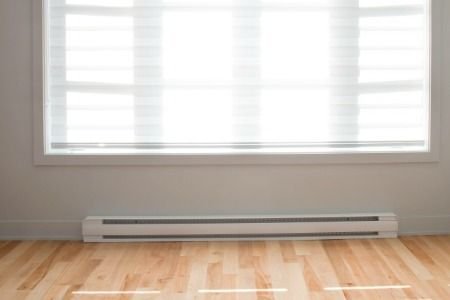
They're not the nicest things to look at but no worse than portable heaters or electric bar heaters with no coal effect.
They are also extremely low down and pretty much out of view unless you have an empty room. It's not like you come in from the cold, have a hot drink and put your feet up on front of them.

Mini-splits seem to be increasingly popular. Like heat pumps/air con but ductless.
One might argue that the appearance is worse as they go higher up than floor level. Although some are more slimline.

 Mar 13th 2016 | 12:36 am
#5

Assimilated Pauper
Joined: Mar 2005
Posts: 40,070
From: Ontario
Re: Central heating options & water heating
<pauses for breath>
Mar 13th 2016 | 12:49 am
#6
Assimilated Pauper
Joined: Mar 2005
Posts: 40,070
From: Ontario
Re: Central heating options & water heating
I much, much prefer logburners as a secondary method of home heating, since even those which are restricted to high burn temp without a rural slide for overnight, will still pump out loads of heat for hours and will work in a power cut. Are logburners common, as I've not seem a single house in the GTA with one?
Lastly, are solar hot water and PV panels in common use/affordable/easily available. I've got no experience with their use in much colder climates, but I do have friends with solar panels in the North of England and Scotland and even with all the grey skies and rain, they have still found them to be financially viable. Given Toronto is much sunnier over winter, I did wonder whether it would be an option or is there some reason why the extreme cold would mean it's not an option.
Mar 13th 2016 | 12:55 am
#7

Peter Darwin
Joined: Jan 2005
Posts: 502
From: Ottawa, Canada
Re: Central heating options & water heating
The advantage with forced air heating is that in the summer you can have central air conditioning to keep cool. Depending where you live dictates how important this is.
We have mains gas and it controls a hot water tank that is separate from heating. The tank supplies hot water for shower/bath/washing machine/dishwasher.
The gas powered heating furnace supplies hot air. The cold air is electricity powered but is distributed through the same heat ducts to all rooms, including basement.
There is a gas line tapped off that runs to the living room that supplies a gas fire.
A separate gas fire is far preferable to a wood fire as you just turn it on and off with the flick of a switch. No mess, no fuss.
We have mains gas and it controls a hot water tank that is separate from heating. The tank supplies hot water for shower/bath/washing machine/dishwasher.
The gas powered heating furnace supplies hot air. The cold air is electricity powered but is distributed through the same heat ducts to all rooms, including basement.
There is a gas line tapped off that runs to the living room that supplies a gas fire.
A separate gas fire is far preferable to a wood fire as you just turn it on and off with the flick of a switch. No mess, no fuss.
Mar 13th 2016 | 1:07 am
#9
Joined: Dec 2001
Posts: 53,356
From: Dixie, ex UK
Re: Central heating options & water heating
The problem with forced air heating and AC if you need to expand heating to a new finished basement is that the heating/cooling system is "sized" for the house, and suddenly adding 50% to the heated/cooled area can leave the system "strugging to keep up". ..... If buying, look out for someone who has finished their basement and not increased the size of their heating/AC system to one appropriate for the increased living space.
Last edited by Pulaski; Mar 13th 2016 at 1:28 am.
Mar 13th 2016 | 6:17 am
#11
BE Forum Addict
Joined: Jan 2011
Posts: 2,040
From: Orton, Ontario
Re: Central heating options & water heating
The problem with forced air heating and AC if you need to expand heating to a new finished basement is that the heating/cooling system is "sized" for the house, and suddenly adding 50% to the heated/cooled area can leave the system "strugging to keep up". ..... If buying, look out for someone who has finished their basement and not increased the size of their heating/AC system to one appropriate for the increased living space.
I don't think I have been in a house with forced air heating that didn't have some heating vents in the basement. However as hot air rises, and cold air sinks, basements are cooler than the rest of the house in both summer and winter.
Mar 13th 2016 | 6:24 am
#12
Joined: Dec 2001
Posts: 53,356
From: Dixie, ex UK
Re: Central heating options & water heating
That is correct - it should run for some of the time, whether heating or cooling. If it runs for extended periods it is either too small, or needs repairing, and if it is too big it will blast you with hot/cold air for a few minutes then shut off then wait a while before another blast of hot/cold air, and repeat ad nauseum.
Mar 13th 2016 | 11:23 pm
#13
Thread Starter
Forum Regular
Joined: Jan 2010
Posts: 248
From: UK at present
Re: Central heating options & water heating
Incidentally do gas fires and gas hob tops in Canada actually run in a power cut? In NZ they have a safety cut out if the electricity is off, I'm assuming because they've got an electric ignition system. In our current house, the water heater is gas and won't run in a power cut but but I can still use a BBQ lighter for cooking on the hob. Not ideal because burning gas without the extractor fan means water vapour as a by-product and condensation.
Mar 13th 2016 | 11:47 pm
#14
Assimilated Pauper
Joined: Mar 2005
Posts: 40,070
From: Ontario
Re: Central heating options & water heating
I wonder at the idea of accumulating a couple of cords of firewood for free. I suppose you could steal it from someone else's stash. Otherwise you're looking at owning a substantial wood lot, a chain saw, a splitter, a tractor or truck, and devoting a lot of time to it.
Last edited by dbd33; Mar 13th 2016 at 11:51 pm.
Mar 14th 2016 | 12:04 am
#15
Oscar nominated
Joined: Jan 2008
Posts: 55,309
From: Moncton, NB, CANADA
Re: Central heating options & water heating
The longest cut we had was from however long it had been out before I discovered it upon getting up in the morning to get the kids off to school until around 11.00 am.
But there had been a line down from the pole to the house and at least one wall socket worked so we used it for the electric kettle and a fan heater. Never had to use the wood stove because of a power loss in over ten years.

I suppose it's just personal taste, but I find wood stoves quite ugly. I'd sooner look at even a plain gas fire.

